
Motorcycle Tour in Slovenia: The 5 Best Routes and What You Need to Know for 2026
Slovenia may be small, but it packs Alpine passes, a turquoise river valley, and the Adriatic coast into a single day’s ride. We’ll show you the five routes that make a motorcycle tour through Slovenia truly unforgettable, how much tolls and vignettes cost, which rules you need to know – and what’s recently changed on the Vršič Pass.
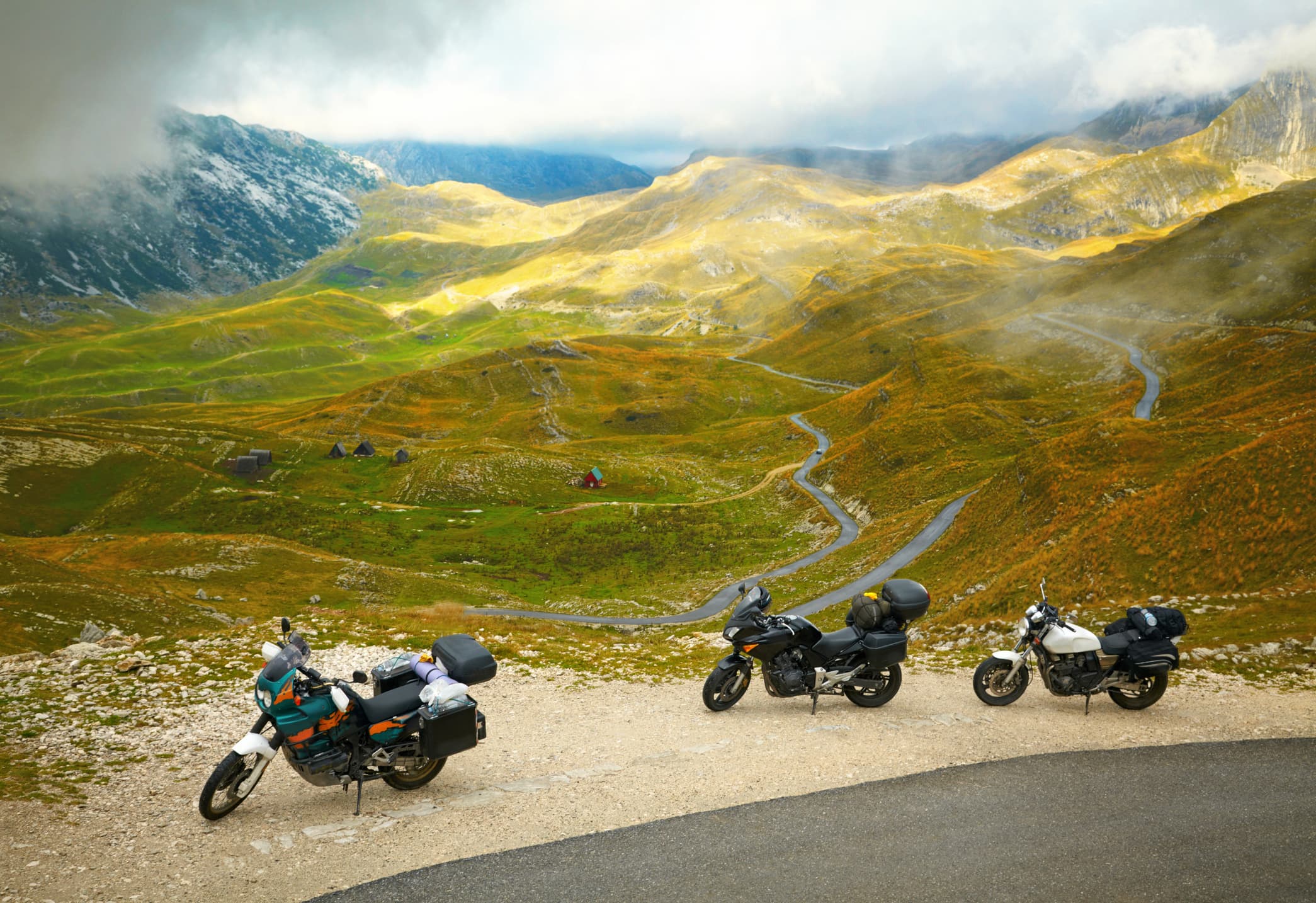
Anyone who’s ever ridden up the first cobbled hairpin from Kranjska Gora will understand the appeal straight away. On a motorcycle tour through Slovenia, the highlights are so close together that you can ride a 5,250-foot mountain pass in the morning, stop by the emerald waters of the Soča at lunchtime, and end the day by the sea. The country is small enough to explore in a week and varied enough to keep you coming back.
This guide covers the key routes, breaks down the costs, and explains the rules you need to know, so you can avoid any surprises at the border or at the top of a pass.
Why Slovenia Works So Well for Motorcyclists
Three things set it apart from the better-known Alpine countries.
- Short distances. It’s only about 155 miles from the Italian border to Hungary. You spend your time on great roads instead of just getting there.
- Four landscapes in a single day. The Julian Alps, karst plateau, vineyards, and Adriatic coast are packed closer together than almost anywhere else in Europe.
- Less crowded than Stelvio Pass. Slovenia’s passes are well known but not overrun – at least outside the peak summer holiday weeks.
The 5 Best Motorcycle Routes in Slovenia
1. Vršič Pass: The Hairpins of the Julian Alps
Vršič is Slovenia’s highest Alpine pass and one of the main reasons riders come here. At 5,285 feet above sea level, it connects Kranjska Gora with the Soča Valley over roughly 15 miles and 50 numbered hairpins, with 24 on the north side and 26 on the south. Gradients reach up to about 14 percent.
What really sets it apart are the cobblestone hairpins on the northern side. They date back to World War I, when Russian prisoners of war built the road, and they can get extremely slippery when wet. If you ride up in the rain, choose your line carefully and brake early.
New in 2026: Since September 1, a new traffic management system has been controlling access to the summit area. During peak season, as announced, from June 15 to September 15, barriers regulate access to the 92 parking spaces at the top. The good news is that you can still ride through without a fee. Only parking is regulated. If you’re just riding over the pass, you won’t be affected. If you want to stop at the top, plan to get there early.
_Season:_ The pass is closed from late October to early May, depending on snow conditions.
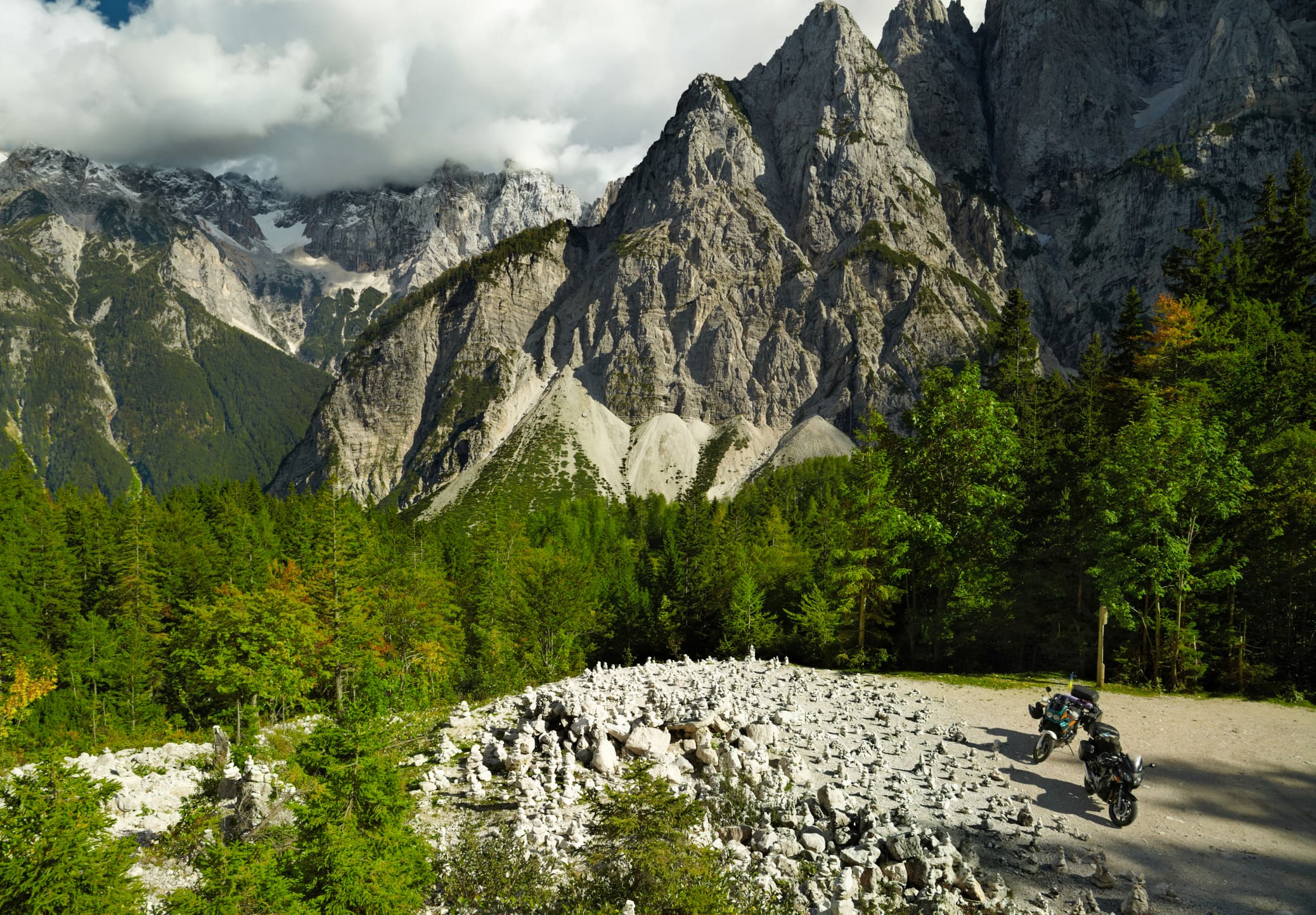
2. Mangart Road: The Highest Road in the Country
If Vršič is the classic, Mangart Road is the wild card. It climbs to about 6,740 feet, making it the highest road in Slovenia you can drive or ride. The route covers roughly 6 to 7.5 miles, with 17 hairpins, several unlit tunnels cut straight through bare rock, and long stretches that are barely more than a lane and a half wide.
It’s a dead-end road: ride up, take in the view, then head back down. That’s exactly why it’s so quiet at the top. To ride up, you’ll pay an eco toll of around 10 euros.
Good to know: Toll prices vary between 5 and 10 euros depending on the source and vehicle type. Budget for 10 euros and check the current price at the barrier. The final section leading up to Mangart Saddle has also been closed for several years.
Not the best choice for your first day in the Alps: tight turns, gradients of up to 14 percent, and dark tunnels. With a little experience, though, it could be the most memorable hour of your trip.
3. The Soča Valley: Europe’s Most Beautiful Scenic Ride
The Soča is one of those rivers you’ve seen in photos but still can’t quite believe until you’re standing right in front of it. Its turquoise water looks Photoshopped, but it’s completely real. The road from Bovec through Kobarid to Tolmin follows the river almost the entire way, with flowing curves, smooth pavement, and plenty of opportunities to pull over.
This is the perfect ride for the day after tackling a mountain pass. It’s less demanding, but it might just be the route you remember most. Make some time for Kobarid, too. The small town was the site of the Battles of the Isonzo during World War I, and its museum is well worth a visit even if you’re not a history buff.
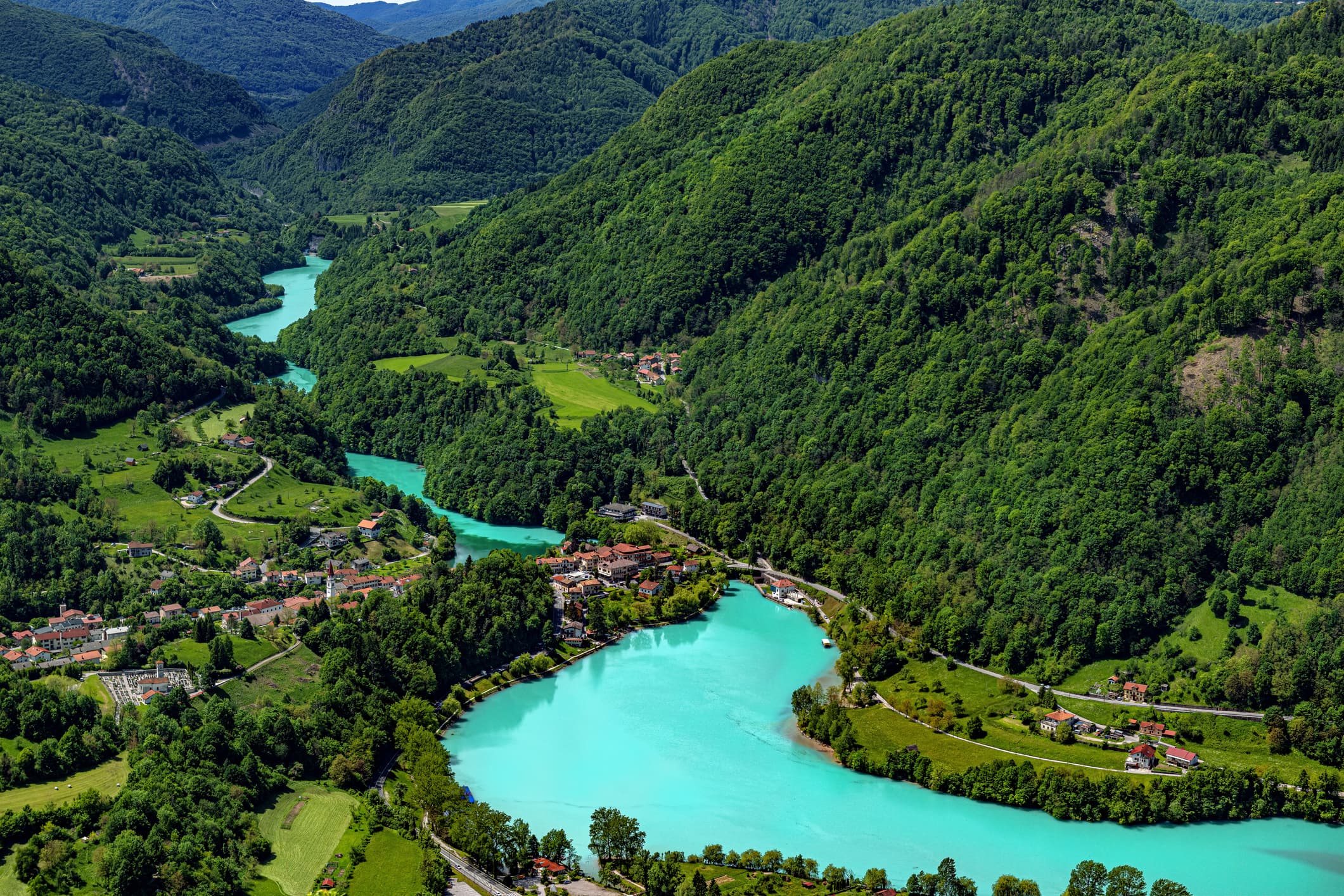
4. Predil Pass: A Quiet Ride Across the Border
Predil Pass (3,790 feet) connects Bovec with Tarvisio in Italy. The roughly 12-mile route has just five major hairpins, smooth pavement, and surprisingly little traffic most of the time. It has been used as a trade route since the 15th century.
Highlights along the way include Lake Raibl on the Italian side and war memorials lining the road. Of the three major passes, this is the most relaxed ride, making it perfect for the way back when your legs are still feeling those Vršič hairpins.
5. Solčava Panoramic Road and Logarska dolina
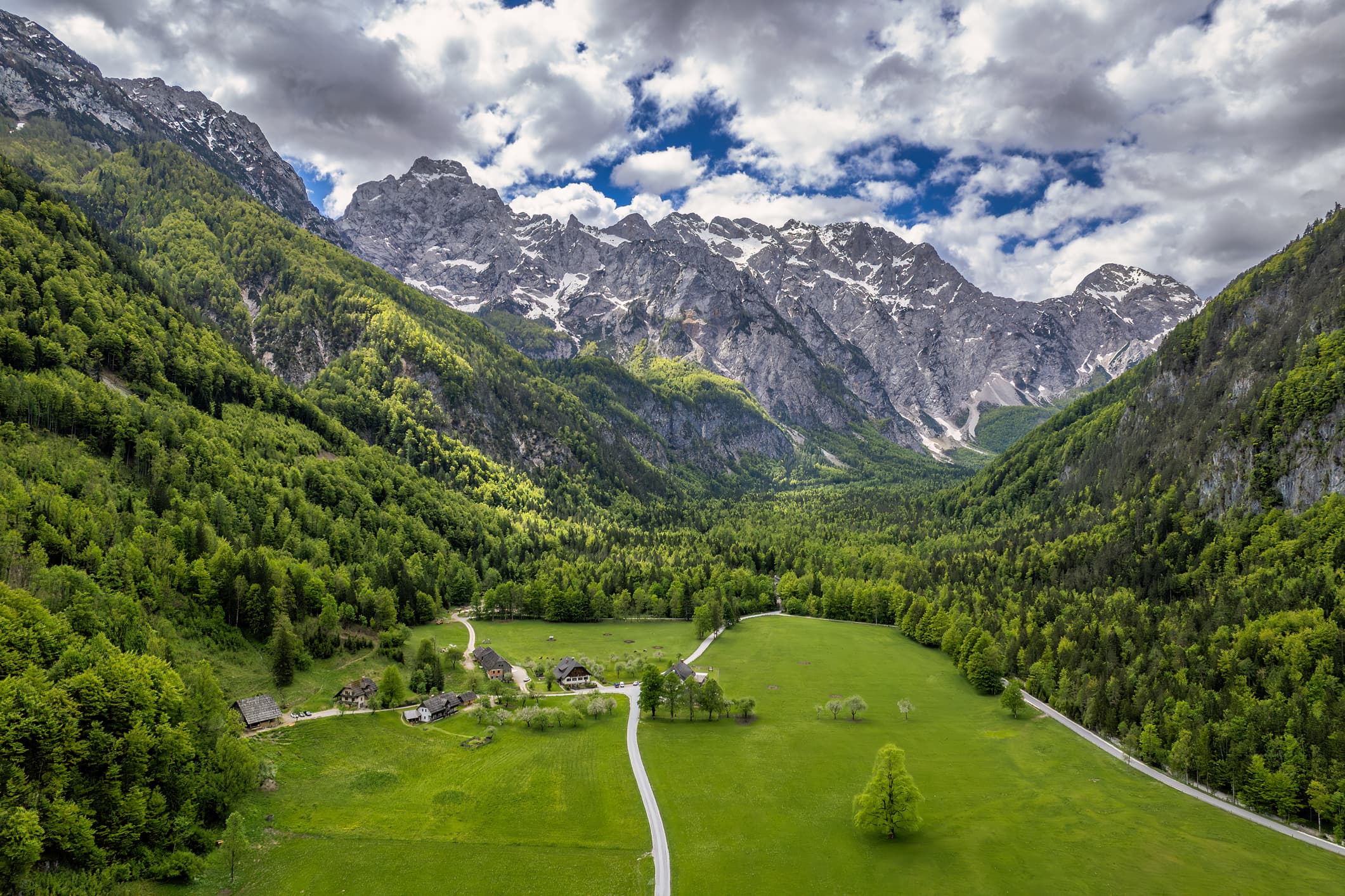
Eastern Slovenia is often overlooked, and that’s a mistake. The Solčava Panoramic Road winds for 23 miles along the slopes above the Logar Valley, passing viewpoints such as Klemenče, Pastirkovo, and Matkov kot. Below lies Logarska dolina, a glacial valley that Slovenians themselves consider the most beautiful in the country.
There’s an environmental fee to enter the Logar Valley. For cars, it ranges from 7 to 10 euros depending on the season. The official website doesn’t list a separate motorcycle rate, so expect to pay a similar amount. The access road is open daily from 8:00 a.m. to 8:45 p.m.
You can easily combine it with Paulitsch Saddle and Seeberg Saddle, two small border passes into Carinthia that are still off most riders’ radar.
Round-Trip Suggestion: Slovenia in Four Days
If you only have a long weekend, this loop works really well. Plan on roughly 340 miles of riding.
- Day 1: Into Slovenia via the Karawanks. Cross into Slovenia via Ljubelj or Jezerski vrh, then continue toward Kranjska Gora.
- Day 2: Vršič and Soča. Cross the pass early, then take it easy through the valley toward Bovec or Kobarid.
- Day 3: Mangart and Predil. Ride up Mangart in the morning, then loop through Italy via Predil Pass in the afternoon.
- Day 4: Eastern Slovenia or the coast. Ride Solčava and Logarska dolina, or head south through the Karst region to Piran on the Adriatic.
There’s a reason for this order. The most demanding route comes on Day 3, when you’ve settled into the ride and have a better feel for your motorcycle in the mountains.
How Much Does a Motorcycle Tour in Slovenia Cost?
Slovenia is cheaper than Switzerland, but there are several small fees that can add up. Here’s what to expect:
- E-vignette, 7 days: €8.00. Required on highways and expressways.
- E-vignette, 6 months: €32.00. There’s no monthly vignette for motorcycles.
- E-vignette, 1 year: €58.70. Prices remain unchanged from 2025 to 2026.
- Karawanks Tunnel (A11): €9.20. Separate toll for a one-way trip.
- Mangart Road: around €10. Eco toll for riding up, although reported prices vary.
- Logarska dolina: €7 to €10. Environmental fee to enter the valley, based on the car rate.
- Parking at the Vršič Pass summit: paid. You can still ride through without a fee.
Slovenia uses an e-vignette linked to your license plate, so there’s no physical sticker. You can buy one online, at gas stations near the border, or at DARS points of sale. Make sure you buy it before crossing the border, not afterward.
A week in Slovenia comes with around €35 in additional fees: €8 for the vignette, €9.20 for a one-way trip through the Karawanks Tunnel, around €10 for Mangart Road, and about €8 for the Logar Valley.
Traffic Rules in Slovenia: The Essentials
- Speed limits: 50 km/h (31 mph) in built-up areas, 90 km/h (56 mph) on rural roads, 110 km/h (68 mph) on expressways, and 130 km/h (81 mph) on highways.
- Alcohol: 0.5‰. The limit is 0.0‰ if you’ve had your license for less than two years or are under 21.
- Lights: Low beams or daytime running lights are mandatory at all times, which is standard practice on a motorcycle anyway.
- Reflective vest: If you get off your motorcycle after a breakdown or accident outside a built-up area, you need to wear one. Make sure you carry one with you.
- Winter tires: Mandatory from November 15 to March 15 and whenever winter conditions apply. This is rarely relevant for motorcycles since the mountain passes are usually closed by then, but it’s worth knowing if you’re riding early or late in the season.
Best Time for a Motorcycle Tour in Slovenia
The mountain passes determine the riding season, not the calendar. Vršič is closed from late October to early May, and without it, you’re missing one of the highlights of the trip.
- May to early June: The passes have just reopened, traffic is light, and the Soča River is at peak flow. A great time to ride if you want to avoid the crowds.
- July and August: Warm weather and generally reliable conditions, but also the busiest time of year. The new parking rules at Vršič are also in effect during this period.
- September: For many riders, this is the best time to go. The weather is usually stable, the roads are quieter, and temperatures remain comfortable even in the valleys.
- October: Expect beautiful fall colors in the Soča Valley, but keep in mind that Vršič can close at any time.
FAQs About Motorcycle Touring in Slovenia
Do I need a vignette to ride a motorcycle in Slovenia?
Yes, if you use highways or expressways. A 7-day vignette costs €8, while a 1-year vignette costs €58.70. It’s an e-vignette linked to your license plate.
Do I have to pay a toll to ride the Vršič Pass?
No, you can ride the pass for free. You only have to pay to park at the summit, where access has been controlled by barriers since September 2026.
How many hairpin bends does the Vršič Pass have?
There are 50 numbered hairpins: 24 on the north side and 26 on the south side.
What is the highest road in Slovenia?
Mangart Road, at around 6,740 feet. It’s a toll road and a dead-end road.
How many days do you need for a motorcycle tour in Slovenia?
Four days will give you enough time to explore the Julian Alps and the Soča Valley. If you also want to include eastern Slovenia and the coast, plan on a full week.
When are the Slovenian passes open?
Vršič is usually open from early May to late October, depending on snow conditions. Predil and Mangart usually stay open longer, but can close at short notice.
Conclusion
Slovenia is a country where every detour is worth it. Vršič delivers the hairpins, the Soča Valley the views, Mangart the adrenaline rush, and eastern Slovenia the peace and quiet. And you can experience it all in just four days.
When planning your motorcycle tour through Slovenia, plan for the curves, not the fastest route. The quickest way from Kranjska Gora to Bovec takes you through a tunnel. The better ride takes you through 50 hairpins. With calimoto, you can find exactly these kinds of routes automatically and check which mountain passes are currently open before you set off.